


.svg)








TRANSACTION
SCREENING
Real-time decisions.
Every payment rail.
Analysts can also build and tailor their own responsible agents, staying in control of exactly how much review to hand over, with every agent decision explainable and auditable.



Three layers. One real-time decision.
Payments now move across more rails, formats and jurisdictions than ever, from SWIFT MT and ISO 20022 to Fedwire and NACHA/ACH, and each of them still needs to clear sanctions and compliance checks before it settles, often against several regimes at once.
Napier AI Transaction Screening reaches one decision on every payment in real time, in three stages. A no-code rule builder and sandbox let your team configure, test and tune screening rules and matching thresholds themselves, differentiated by payment rail, business unit or customer risk type, without engineering support.
Matching goes further with AI. Fuzzy name matching spans more than 20 languages and scripts, handling transliteration, variant spellings and partial matches that exact-match tools miss, and every recommendation comes with a clear, human-readable justification for analysts and regulators alike. Whitelisting acts on known false positives automatically, with full governance and a complete audit log, so cleared entities don't keep re-alerting.
Responsible agents build on this further. Your team can create and tailor agents in the sandbox, choosing exactly how much autonomy to hand over, from flagging matches for review to clearing them automatically. The human decision maker stays in charge throughout, with every agent action captured inthe audit trail.
The result is a single, highly configurable platform that keeps sanctions and compliance checks inside the settlement window rather than outside it, no matter how many rails, formats or regimes you're screening across.
Features

Real-Time Decisioning

Multi-configuration screening

Responsible agentic AI

AI match recommendations
Entity extraction

Advanced rule builder & whitelisting
Benefits

Deployment flexibilty
Deploy in real time via our fully managed SaaS solution, in any privatecloud, or on-premise.
Integrate into your existing case management system, oruse Napier AI's own.

Real-time screening, powered by real-time data
Screens every payment type as it happens, matched against continuously updated sanctions, PEP and watchlist data from our intelligence partners, so compliance checks never lag behind the payment itself.

Entity extraction cuts false positives at source
Classifies and validates payment data, persons, organisations, financial identifiers, vessels and addresses, before it ever reaches the screener, so matching happens with far greater precision from the outset.

No-code configuration, tuned to how you screen
Test, tune and optimise screening rules and matching thresholds in the integrated sandbox, differentiated by payment rail, business unit or customer risk type, before anything goes live.

Whitelisting reduces repeat alerts automatically
Known false positives are suppressed or discounted automatically, with full governance, time-boxed rules and a complete audit log, so cleared entities don't keep re-alerting.

AI fuzzy matching across 20+ languages
Transliteration, phonetics, nicknames, spelling errorsand more, across more than 20 languages and scripts.

AI match recommendations speed up decision-making
AI helps analysts review alerts faster by presenting a plain language recommendation, identifying likely false positives and explaining why an alertwas raised.

Native support for every major payment rail
Message parsing works out of the box across SWIFT MT, ISO 20022, SEPA Instant, Fedwire and NACHA/ACH, so there's no integration layer to build yourself.

Responsible agents clear the routine work
Build and tailor agents in the sandbox to triage or clear known patterns automatically, with the human decision maker always incontrol and every action captured in the audit trail.

Closes sanctions coverage gaps other tools miss
Securities identifiers such as ISIN and LEI are resolved to their issuing entities for sectoral sanctions screening, and vessel names, IMO and MMSI numbers are screened against maritime sanctions lists.
See what our clients have to say
“We chose the Napier AI platform because the team was able to deploy in just six weeks, we were incredibly impressed by the innovations within the platform which supported both a rapid go-live as well as delivering tangible results for us in terms of financial crime compliance.”
Steve Newson
Chief Technology Officer at Starling

Details
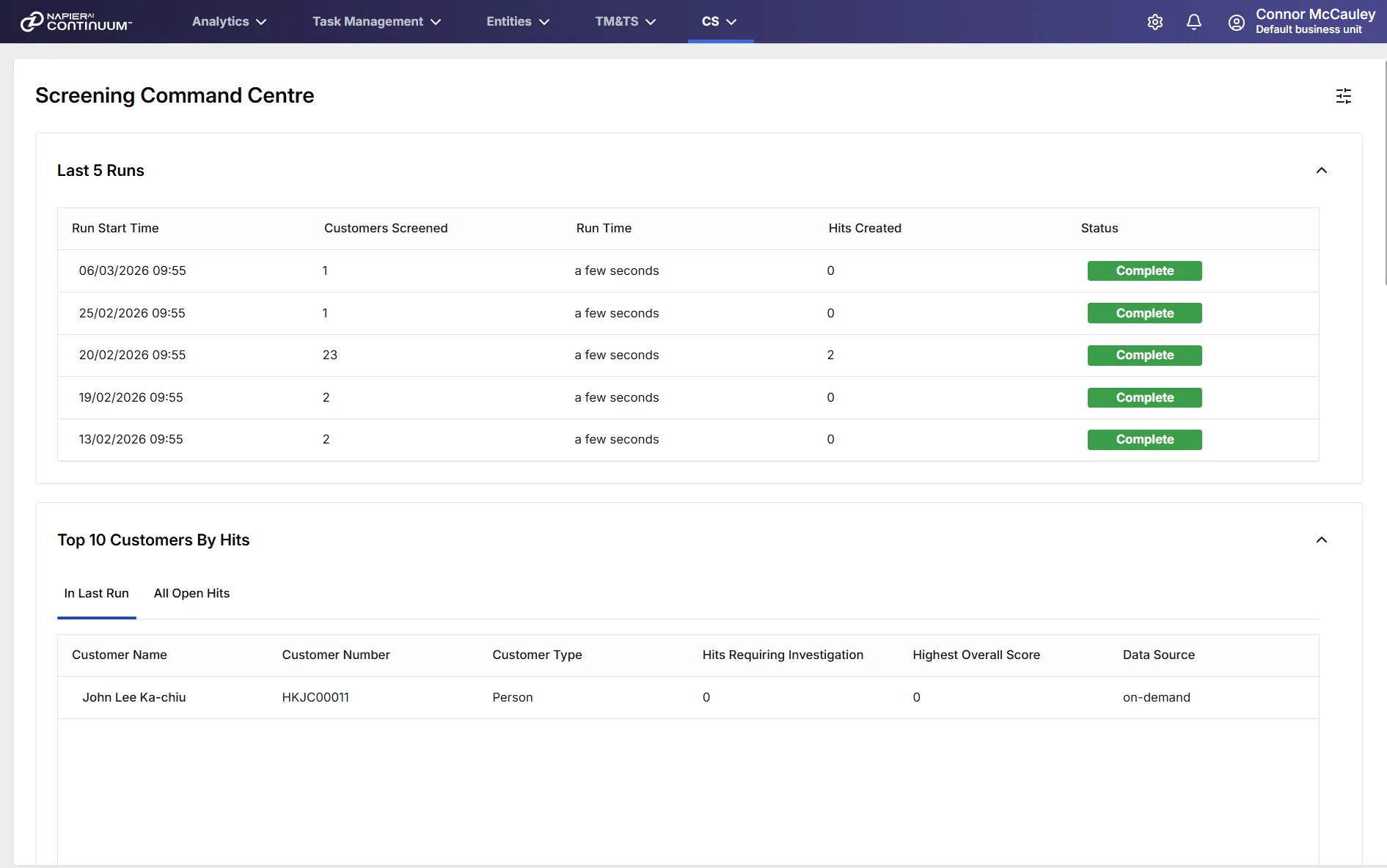
Why you need to be real-time
Real-time decisioning means every payment is screened as it happens, not batched and checked afterwards. Napier AI Transaction Screening runs that check inline, before the payment settles, so a clean payment moves straight through and a genuine match is caught before money moves, not after the fact.
That matters because settlement windows have closed. Fedwire, NACHA/ACH and UK Faster Payments clearin seconds or hours rather than days, and high-value correspondent flows over SWIFT MT and ISO 20022 still require in-path sanctions screening on every message, against multiple regimes at once. Screening that runs after settlement, or in an overnight batch, is not checking the payment, it is checking a payment that has already gone. Napier AI Transaction Screening keeps the check inside the window, screening every message before it settles.
Screening tuned to risk, not one setting
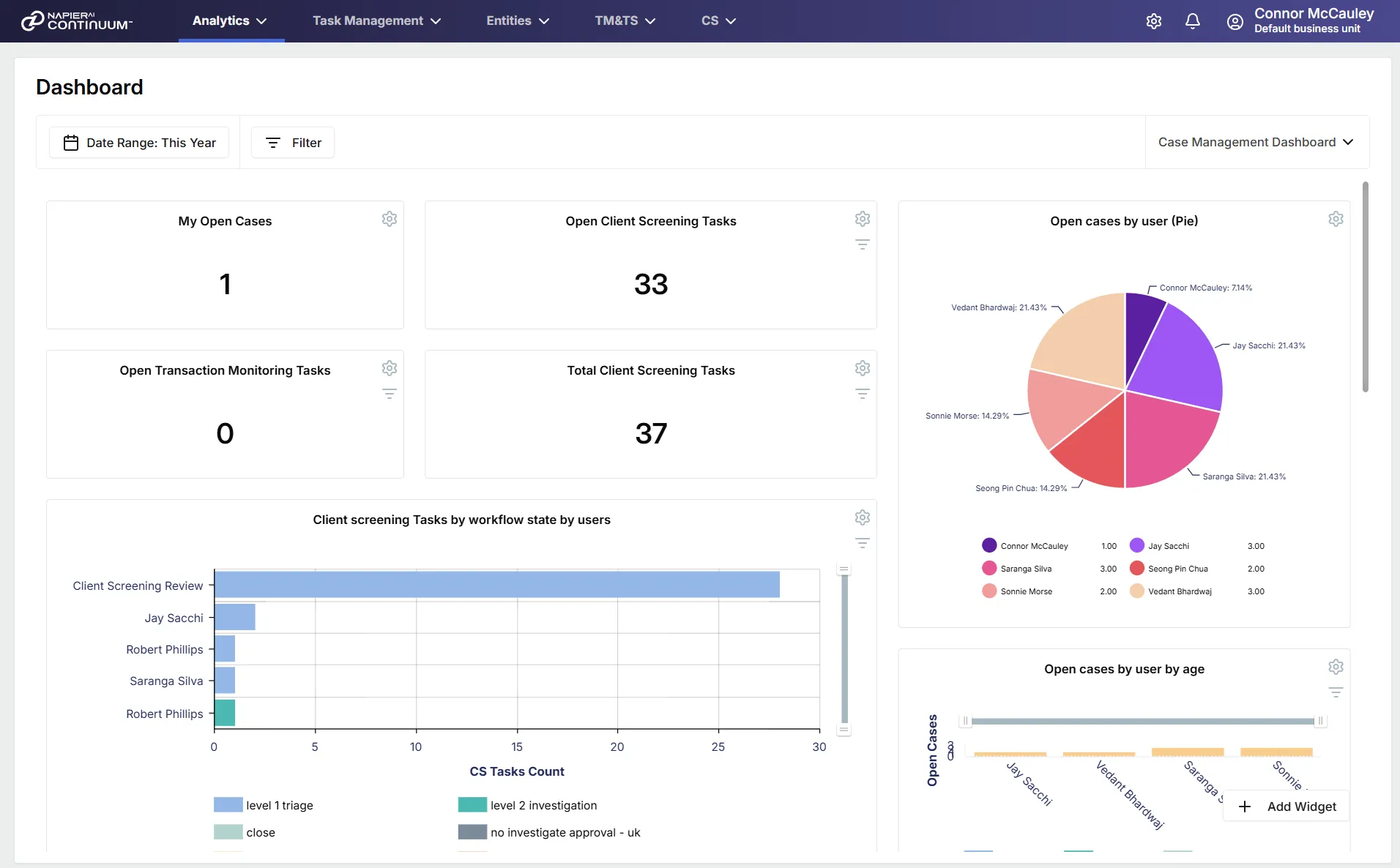
A single global threshold forces a trade off: set it loose enough to catch genuine risk on your highest risk payments, and you flood every other payment type with unnecessary alerts. Set it tight to keep volumes manageable, and you risk missing what you're actually meant to catch.
Napier AI Transaction Screening runs multiple screening configurations at once, rather than one setting for everything. Matching can be more sensitive for sanctions, so no potential hit is missed, and tighter for politically exposed persons (PEPs), to cut unnecessary noise, tuned independently by payment rail, business unit or customer risk type. Your team tests and adjusts these configurations in the sandbox on real data, and keeps refining them as risk appetite evolves, with no impact on day-to-day operations.
Agents that clear the routine, not the judgement
Not every alert needs an analyst. Some are known patterns your team has already decided how to handle, over and over. Responsible agents take that repetition off analysts' hands, triaging and clearing recognised patterns automatically, so review time goes to the alerts that genuinely need a decision.
Build and tailor agents yourself in the AI Studio, and decide exactly how much autonomy each onegets, from flagging matches for a second opinion to resolving them independently. The human decision maker always stays in charge, and every action an agent takes is captured in the audit trail, explainable and auditableto a regulator.
Two engines, working together
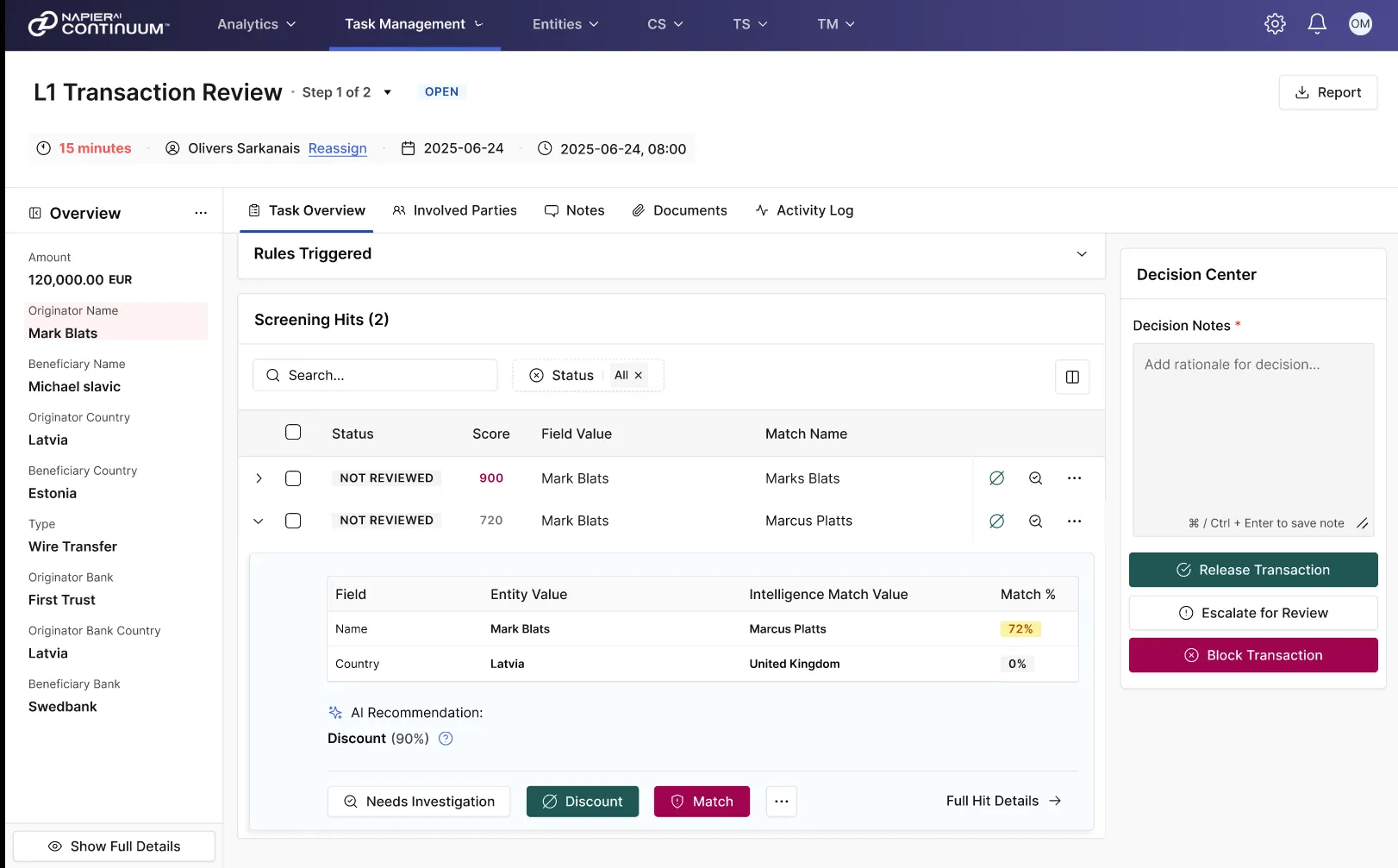
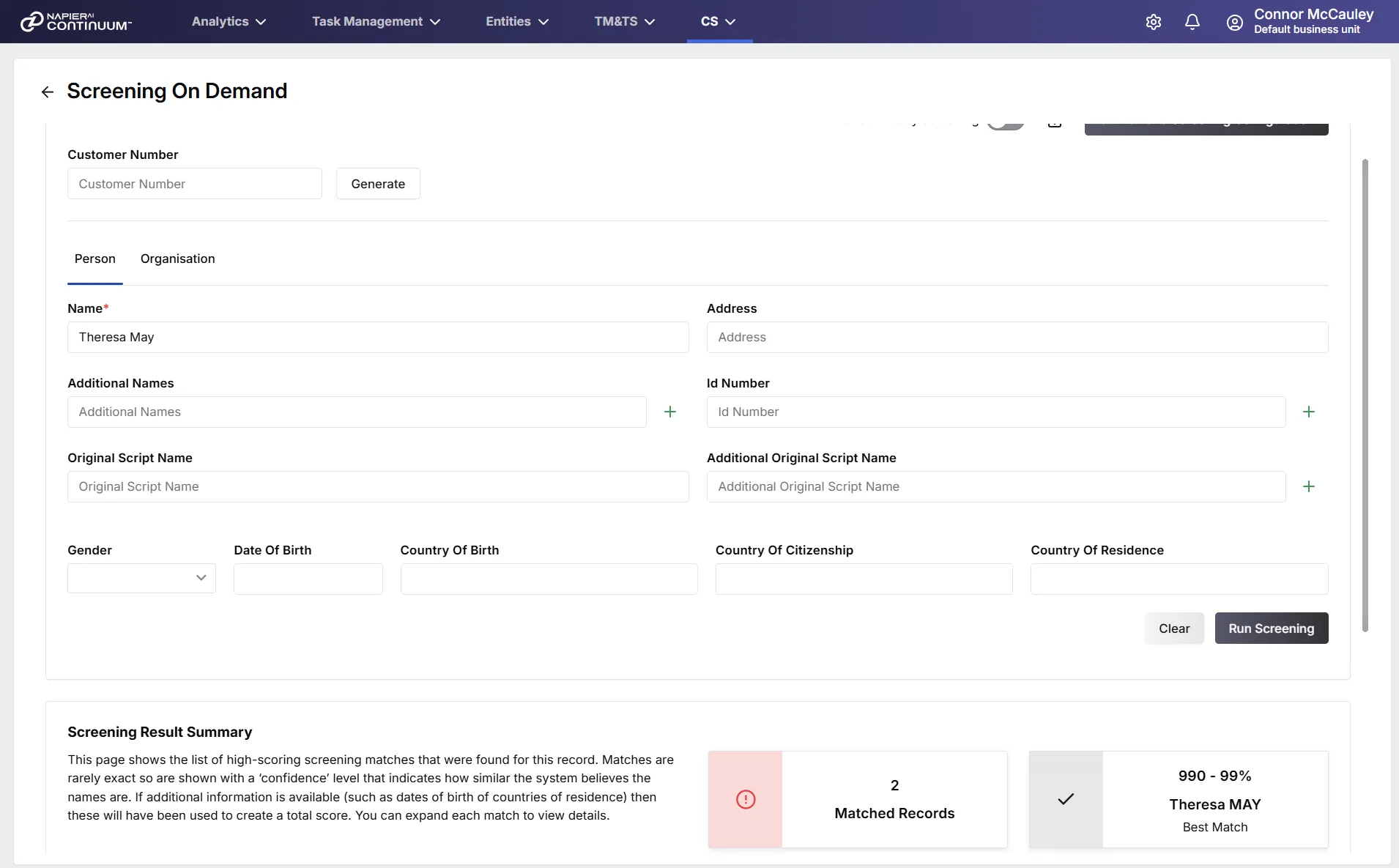
Matching happens in two stages, not one. Before an alert is created, Napier AI Transaction Screening's fuzzy matching engine spans more than 20 languages and scripts, including simplified Chinese and Arabic, handling transliteration, variant spellings, nicknames and partial matches that exact-match tools miss, so genuine risk doesn't slip through under a different spelling.
After a match, a second engine takes over. AI scores the alert based on match quality and available attributes, such as date of birth, ID or nationality, and presents its recommendation as a plain language explanation of why the alert was raised and whether it's likely a false positive. Every analyst decision then feeds back into this engine, tightening thresholds automatically over time, so false positive rates fall as the system learns your institution's own patterns. The analyst always makes the final call, and every recommendation stays explainable and auditable to a regulator.
Entity extraction: structure first, then screen
A payment message arrives as a mix of structured and unstructured data, names buried in narrative fields, reference numbers that look like identifiers, addresses folded into free text. Screened as-is, that's exactly the kind of noise that drives false positives.
Napier AI Transaction Screening reads the message first, classifying each element by type and role, person, organisation, vessel, sender versus intermediary, and isolating addresses from the surrounding text before matching ever starts. Financial identifiers such as IBANs, BICs, ISINs and LEIs are validated automatically, so malformed or fragmentary data doesn't reach the screener as a false signal. Securities identifiers are resolved to their issuing entities for sectoral sanctions screening, and vessel names, IMO and MMSI numbers are extracted for maritime sanctions screening, closing coverage gaps a name-only screener would miss entirely. All of this runs in-process, with no separate step and no delay added to the transaction
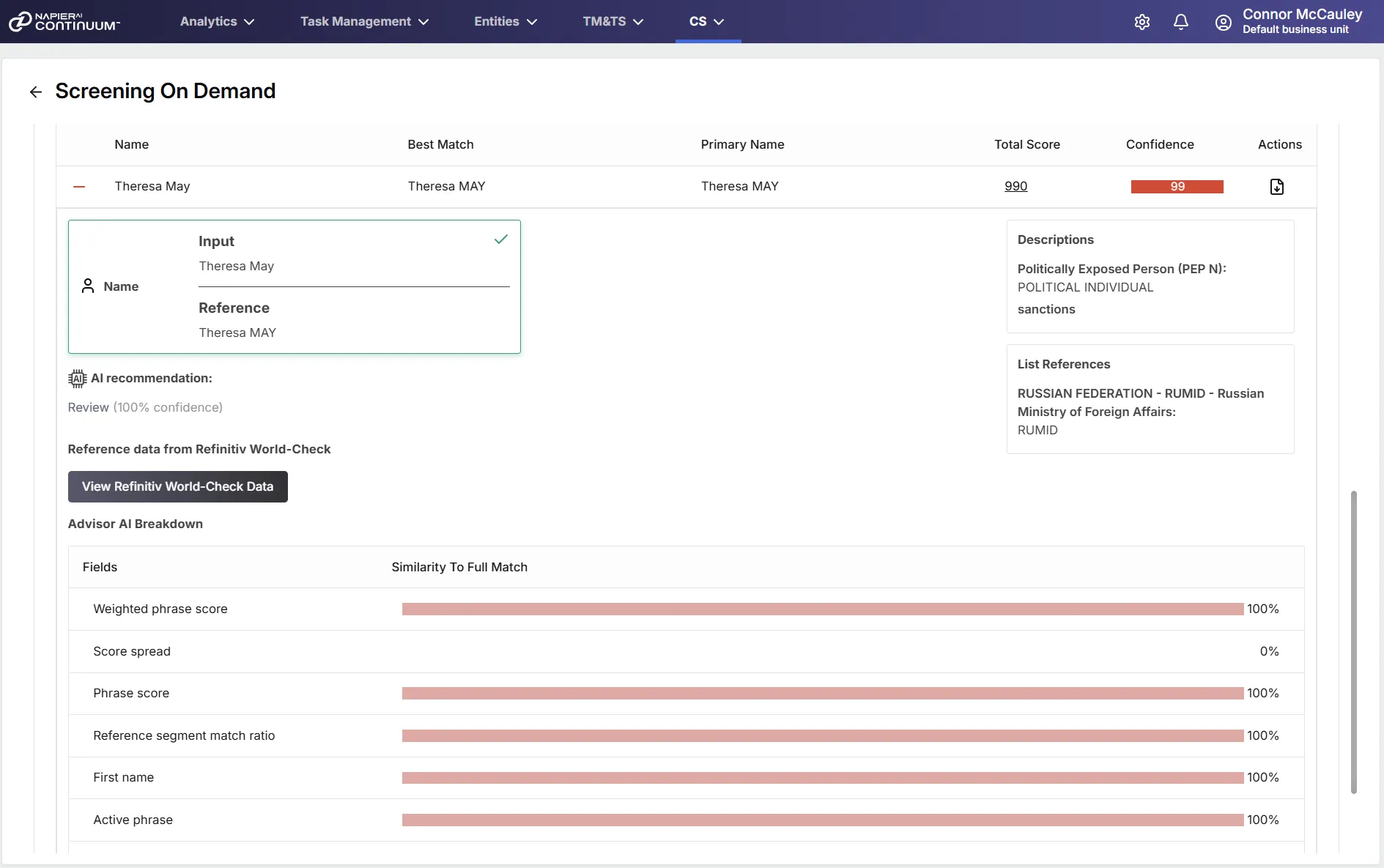
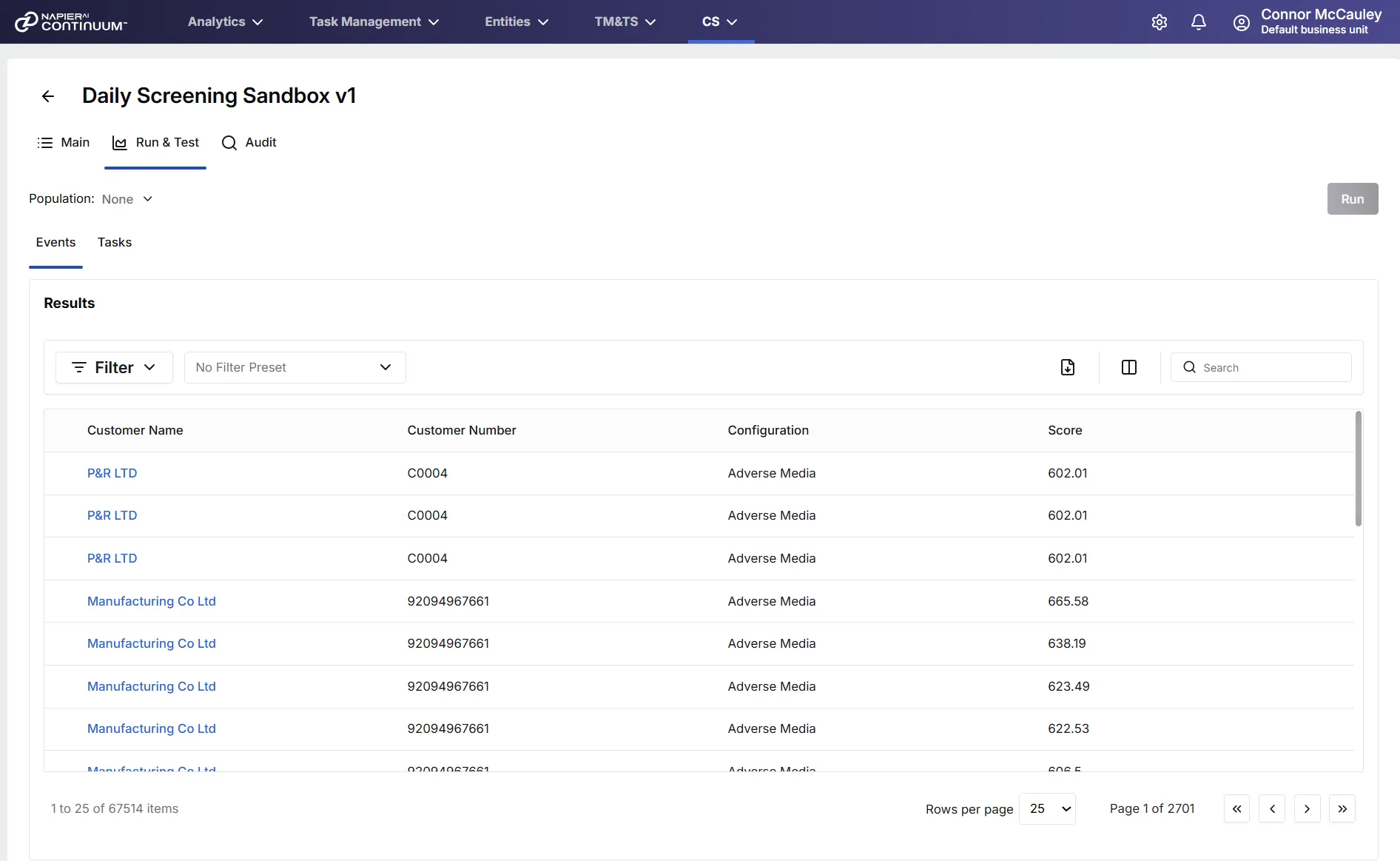
Integrated sandbox to test screening configurations
Napier AI Transaction Screening's no-code rule builder lets your team build and adjust screening rules directly, without engineering support. Every change is tested in the sandbox against real data first, with a direct comparison against the current configuration, so the impact is clear before anything is committed.
The same sandbox governs whitelisting. Known false positives can be suppressed or discounted automatically, with time-boxed rules and a complete audit log, so an entity that's already been cleared doesn't keep re-alerting, and every rule change stays fully accountable.
Results with real impact


Demo

NextGen Transaction Screening product demo
Assess how real-time transaction screening can strengthen compliance outcomes at scale. See how configurable workflows, AI-driven insights, and reduced false positives support faster, more informed decisions across high-volume payment environments.
Downloads

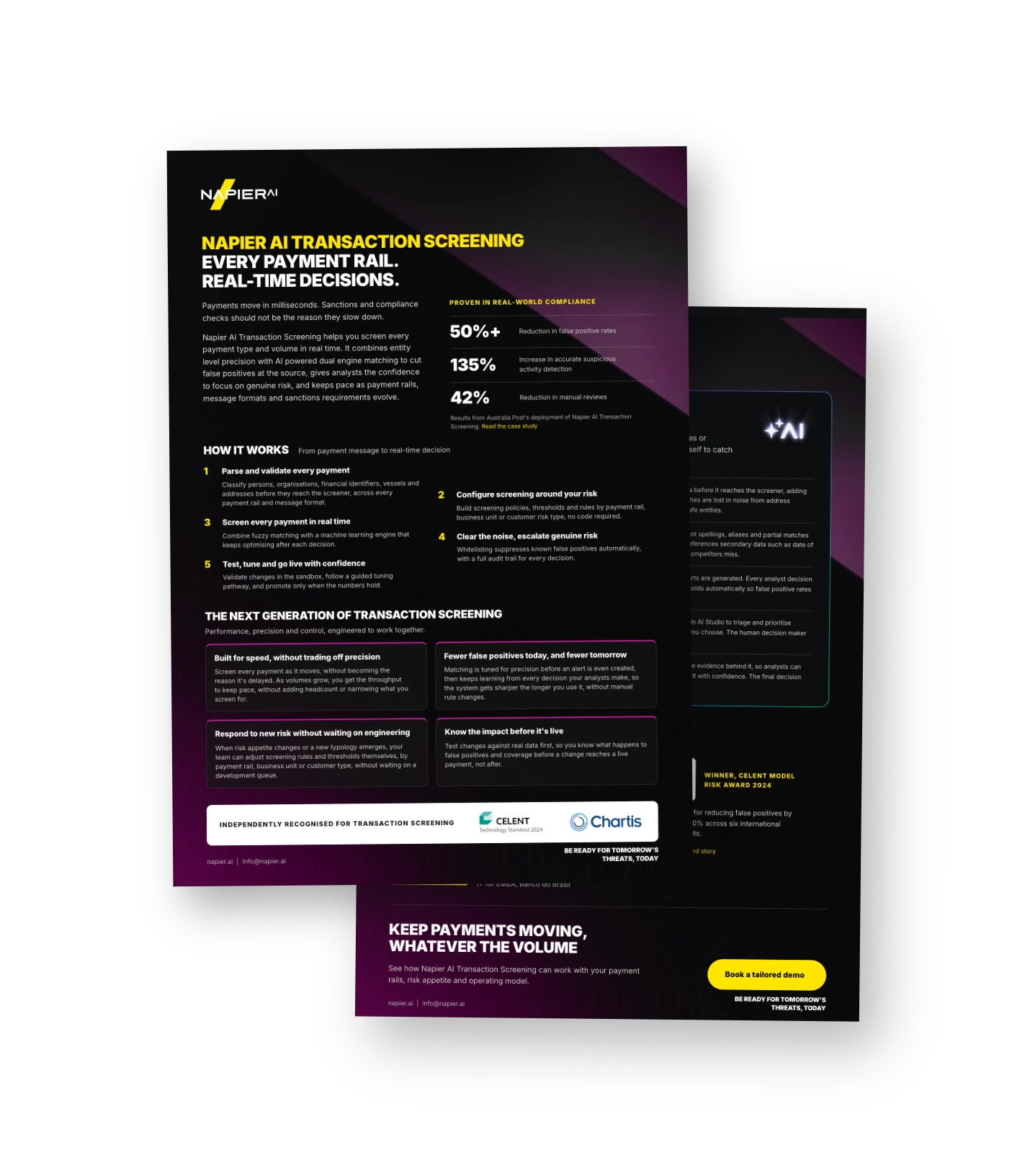
Blog


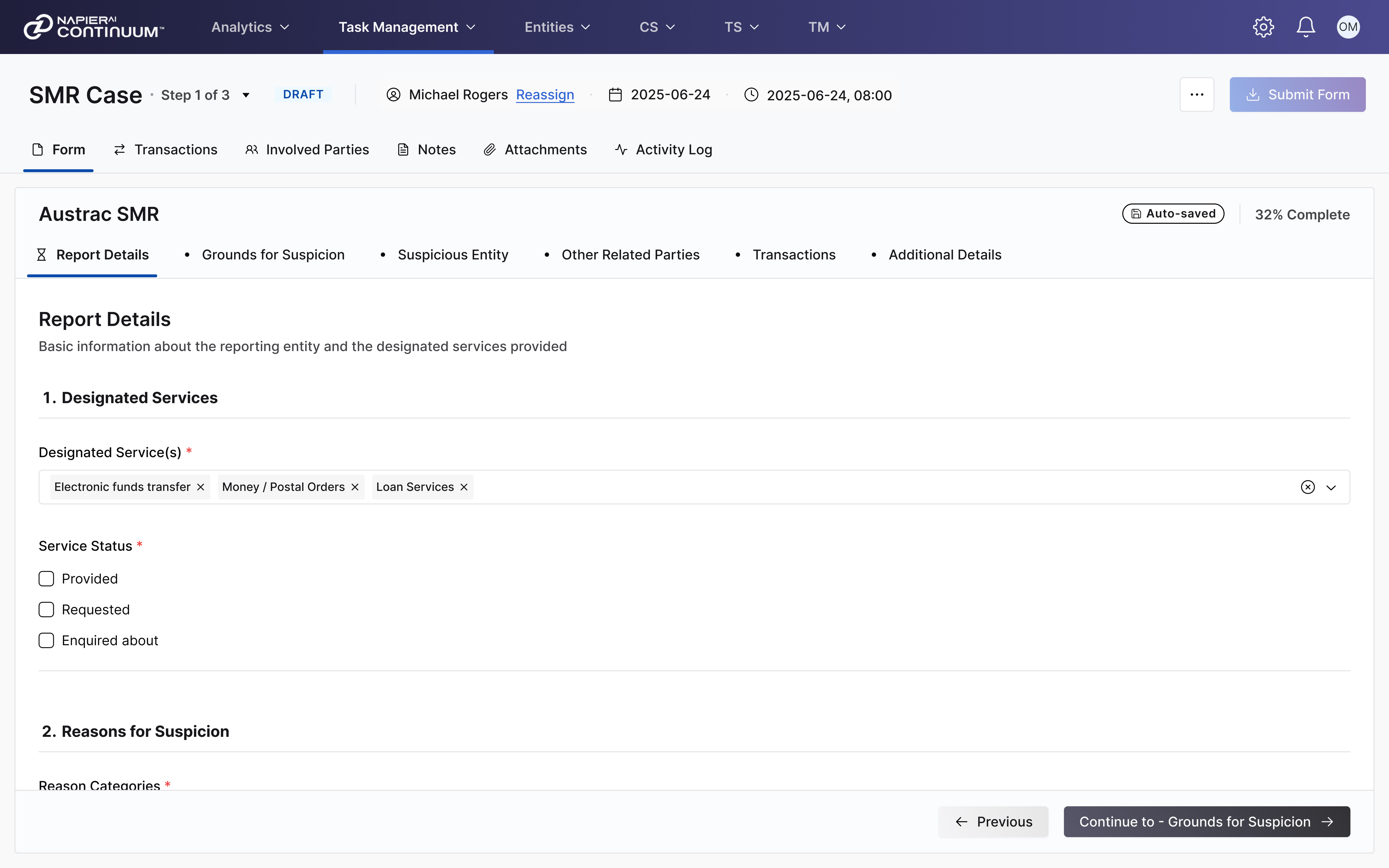
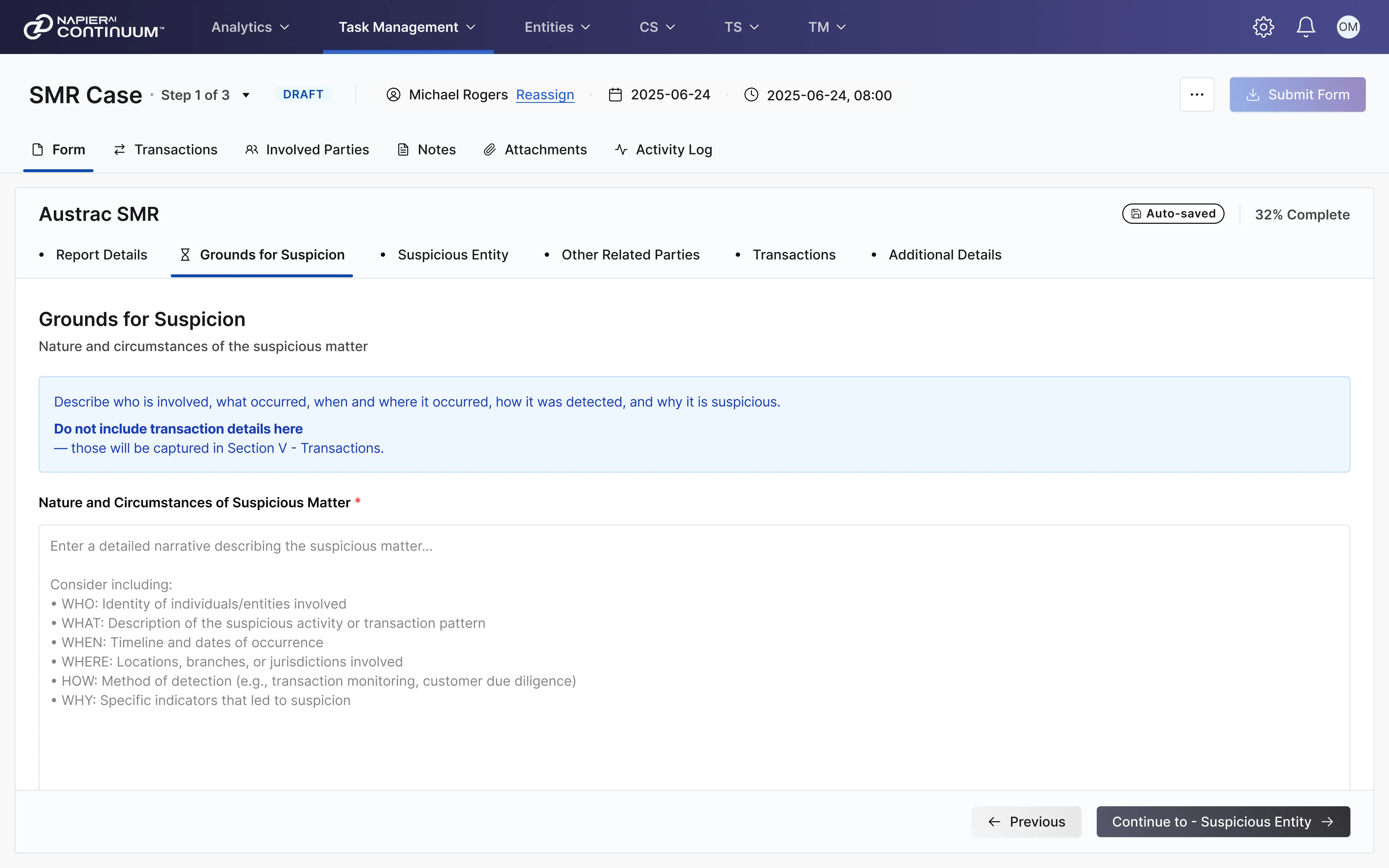
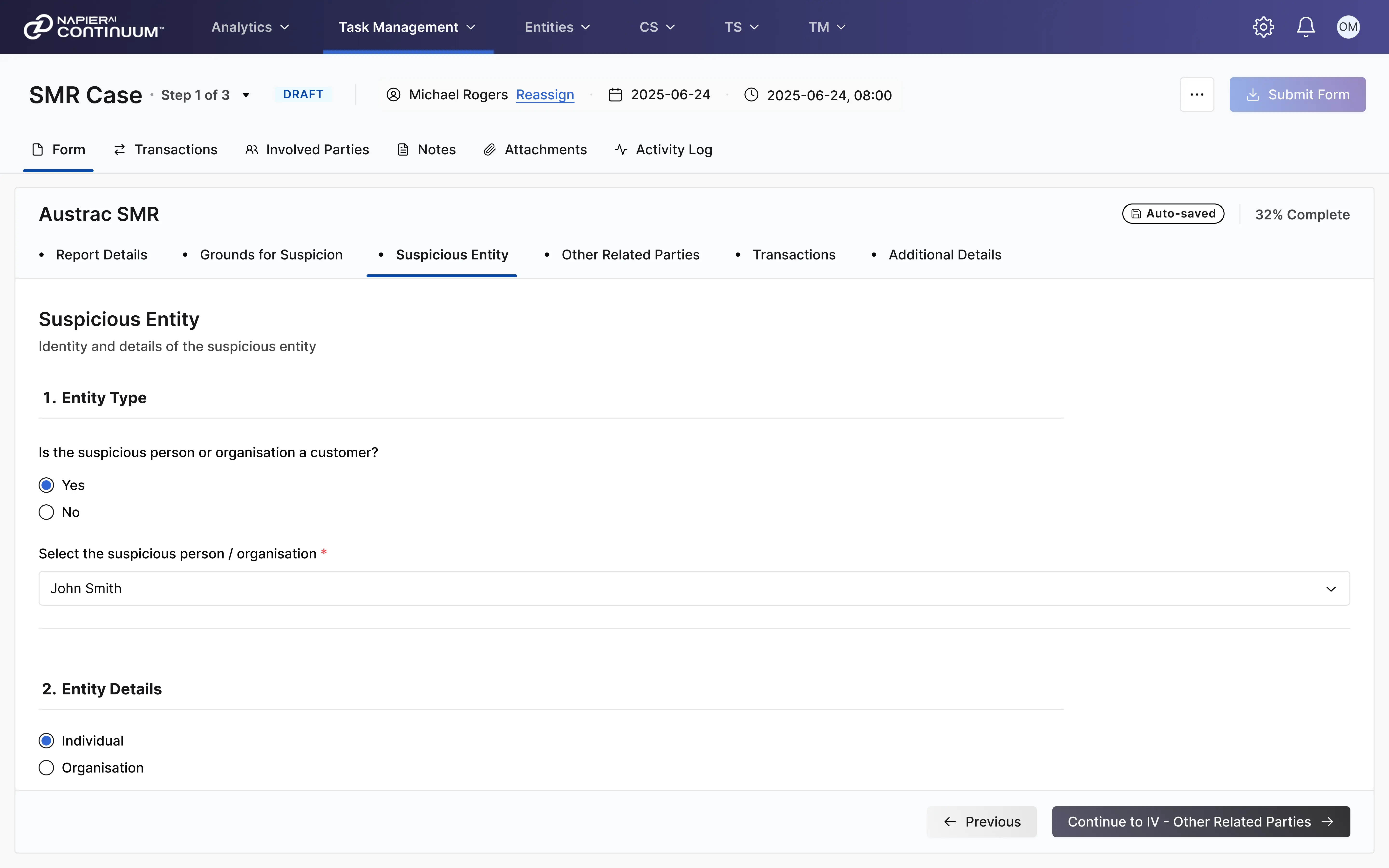
The Regulatory Reporting Manager helps compliance teams collate necessary data to build and submit high quality suspicious activity reports to the relevant enforcement agency securely and on time.
Napier AI’s Regulatory Reporting Manager can help reduce the time involved in compiling suspicious transaction reports, with encrypted form-building providing complete assurance against tipping-off, and auto-collation accelerating the process.
Our Solutions


Transaction Monitoring


Transaction Screening

It’s time. Let’s talk.
Book a demo and get critical insight into our unique approach,
approved by world leaders in risk management.


- Get access to bi-monthly newsletters with insightful reads and curated regulatory news
- Be the first to receive our latest whitepapers, eBooks and podcasts
- Get invited to exclusive events, featuring AML compliance experts from across the industry
