










The only global ranking of AI’s impact on anti-money laundering, now across 42 countries.
Developed by data scientists, for a transparent and explainable view on AML effectiveness
NOT JUST ANOTHER SURVEY

42 countries ranked
Across Europe, the Americas, the Middle East and Africa, and Asia Pacific, now including Greece and the Philippines, ranked on how effectively and efficiently they fight illicit finance.

Explainable inputs
Modelled from FATF, UNODC, OECD, Basel AML Index, Organized Crime Index and Transparency International data, with the methodology published in full so every score can be interrogated.

Backed by data science
Led by Chief Data Scientist Dr Janet Bastiman, combining extensive secondary research with 25 new in-depth interviews with senior financial crime decision-makers, conducted by GlobalData.

Consistent year-on-year
When source coverage expands, as FATF’s did this year, historic data is restated too, so movement in a score reflects real change.
EXPLORE THE INDEX
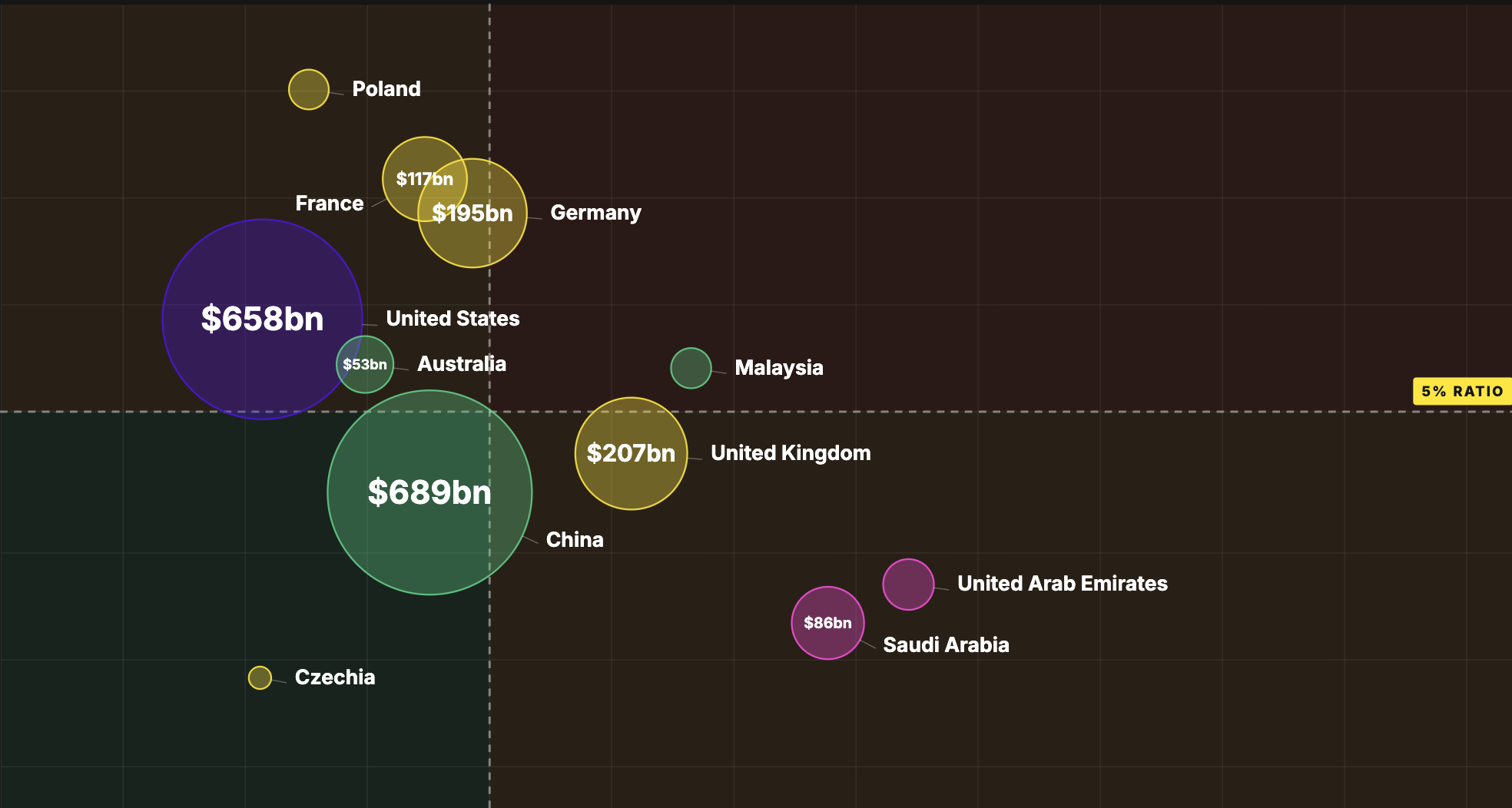
Interactive AML effectiveness quadrant

Hey! Looks like you're on a mobile device.
Open this link on a desktop or larger diaplay to see market insights and defining shifts in our new interactive index preview.
Read the report insights
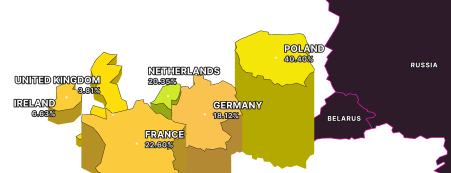
The border line of financial crime
Why do some nations spend far more on AML than their own domestic risk would predict? Testing geographic exposure and geopolitical alignment against UN voting records, Janet maps a border line of financial crime that follows real fault lines and shifts with every new sanction. If today’s spend reflects yesterday’s politics, where will compliance budgets be needed tomorrow?
Read more in the report

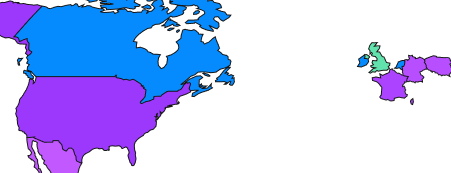
The AI leap year?
Innovation in financial crime compliance is assumed to flow from developed markets outwards. The interview data suggests otherwise. Free of legacy infrastructure, some markets are landing straight on cloud-native, AI-ready platforms, while the UK shows a permissive regulator can offset ageing systems. So will 2027 be the year the latecomers leap ahead, and what is still holding everyone else back?
Read more in the report
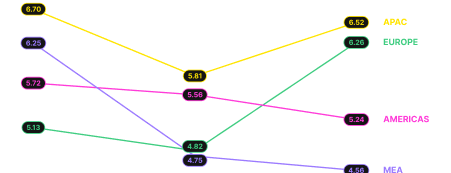
Collaborating to combat crime
Collaboration works, but it doesn’t happen by accident. Markets where regulators actively provision for data sharing report lower money laundering losses and a lower cost of compliance. Institutions say peer collaboration is their top priority, yet consistently undervalue one partner that could sharpen their detection. Who is it, and what should regulators build next?
Read more in the report
Built by Napier AI’s data scientists with GlobalData, from public data and 25 expert interviews: a transparent, explainable view of AML effectiveness.

The Napier AI / AML Index: a global view on AI’s impact on AML
Napier AI’s data science team, led by award-winning Chief Data Scientist, Dr Janet Bastiman, created the Index in partnership with GlobalData. Now in its third edition, it remains the only global ranking of AI’s impact on anti-money laundering.
Too many compliance programmes mask the problem rather than reduce the risk. This report shows what compliance costs society and financial institutions, where that spend is working, and where AI could close the gap.

42 Markets
Every market ranked, with the data behind each score
Peer benchmarks
See how your market’s AML performance and AI adoption compare with up to five peers
Market insights
Wins, gaps and predictions for every market in the Index
Global losses
Money laundering losses modelled across 161 countries
Spend sweet spot
Find the ideal level of AML spend, and whether your market is over or under it
Defining shifts
Three articles on the forces reshaping financial crime compliance this year
key findings
$5.09tr
Laundered every year
4.30% of global GDP, down 3.84% on last year: the first sign the tide is turning.
$3.05tr
Recoverable every year
if every market matched the Index’s highest-performing country.
$143bn
Saved every year with AI
on the cost of compliance, if financial institutions used AI-driven AML systems.
10.8%
Of Russia’s GDP lost
to money laundering, the highest share in the Index and two and a half times the global average.
The impact of AI on AML: why it matters
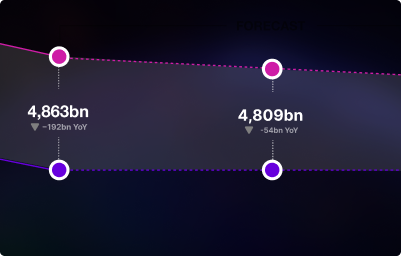
Are you planning your 2027 AML strategy?
Build the business case for AI-driven savings into your technology budget, and benchmark your compliance spend against this year’s ideal range.
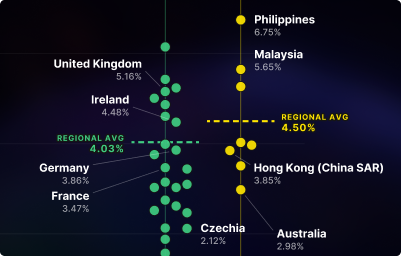
Do you operate across multiple jurisdictions?
Go market by market, see where your exposure to the border line of financial crime is concentrated, and tune your AML strategy to match.
Is your AI programme stuck on the basics?
See which markets are leapfrogging legacy systems, which use cases they put into production first, and why the human in the loop is the design, not a phase.
Are you trying to stay ahead of regulation?
See where regulators are enabling AI and data collaboration, where firms say they are falling behind, and what that means for your market.
"The Index puts money laundering losses and the cost of compliance side by side, and that is where the conversation starts. The question for institutions is whether their spend is aimed at the right risks, and whether AI is improving detection or simply clearing alerts faster."
Serpil Hall
Strategic Advisor, Fraud & AML


HOW DOES YOUR COUNTRY STACK UP? DOWNLOAD your free copy
Find out whether your country’s financial crime compliance spend is effective, excessive, or insufficient in the fight against illicit finance.
What you'll get
What you'll get: A seventy five page index that ranks forty two countries by their effectiveness in using AI for anti money laundering (AML). The index includes a detailed research methodology, as well as regional and country-level analyses. Each page provides specific recommendations for enhancing the effectiveness of AI in AML efforts.
Disclaimer & Academic Citation
All photographs and images in this report are for illustrative purposes only and may not depict actual locations, countries, cases, or activities described.
To cite this report please use:
Napier AI (2026) AI AML Index 2026-2027.
Available at: https://www.napier.ai/ai-aml-index